The RulesAtSea learning library
Read the rule.
Practise the decision.
A clearer picture of collision rules, navigation lights, day shapes, sound signals and buoyage. Learn the essentials, then take the watch in a free marine simulator.
International COLREGs / IRPCS · IALA Regions A and B
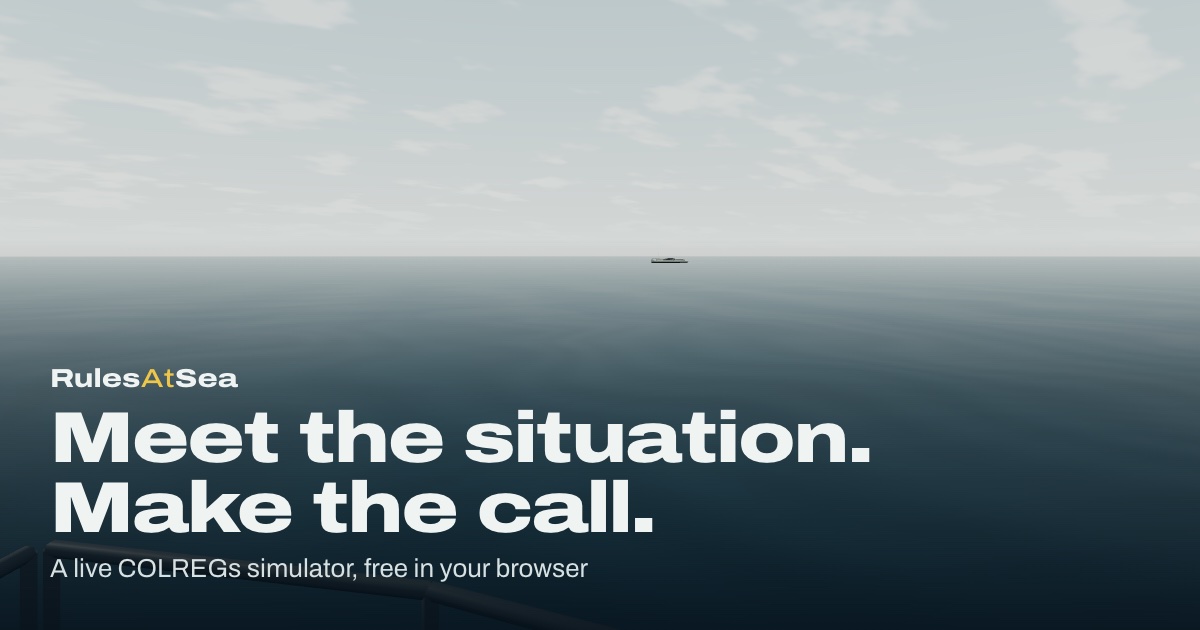
From understanding to actionRead a guide. Open its exercise. See your decision play out.
Choose your next topic
Guides for a better lookout
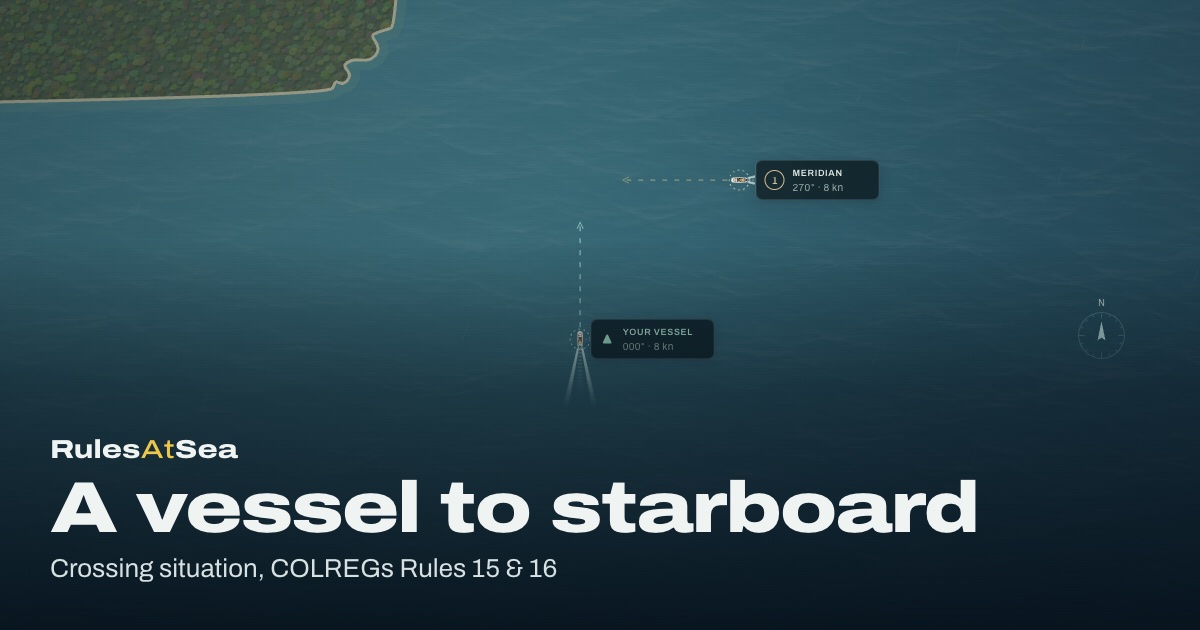 International collision rules
COLREGs and collision avoidance
Understand crossing, head-on and overtaking situations, give-way and stand-on duties, then practise the international collision rules in RulesAtSea.Read the guide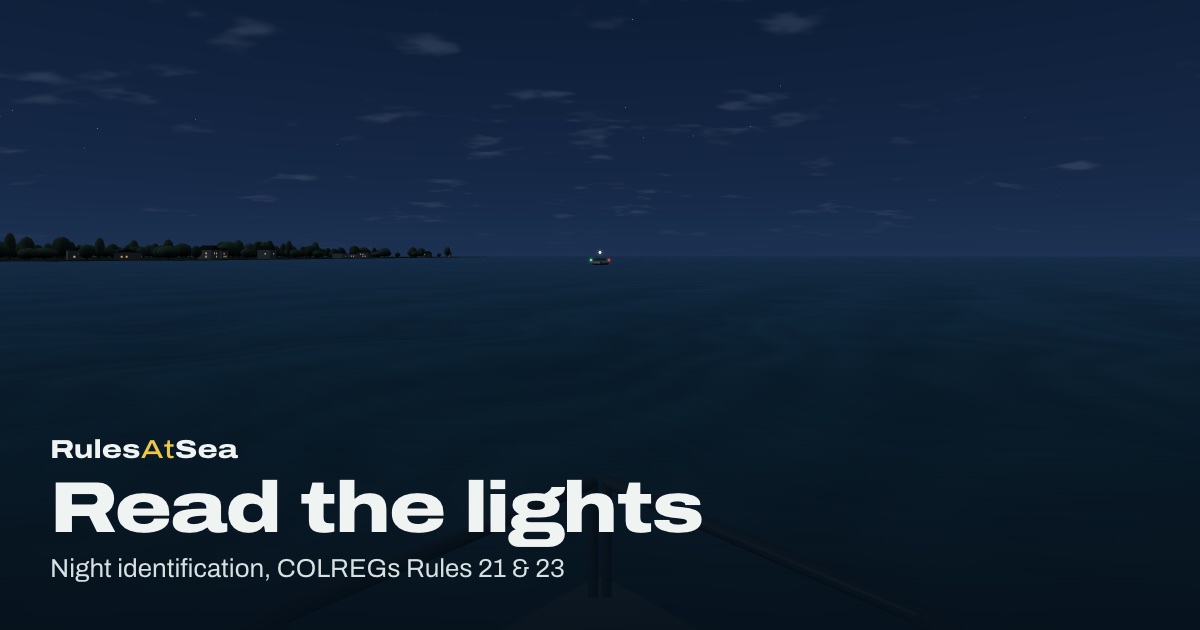 Read the lights
Navigation lights
Learn boat navigation light colours, viewing sectors and vessel status, then identify lights at night in the RulesAtSea simulator.Read the guide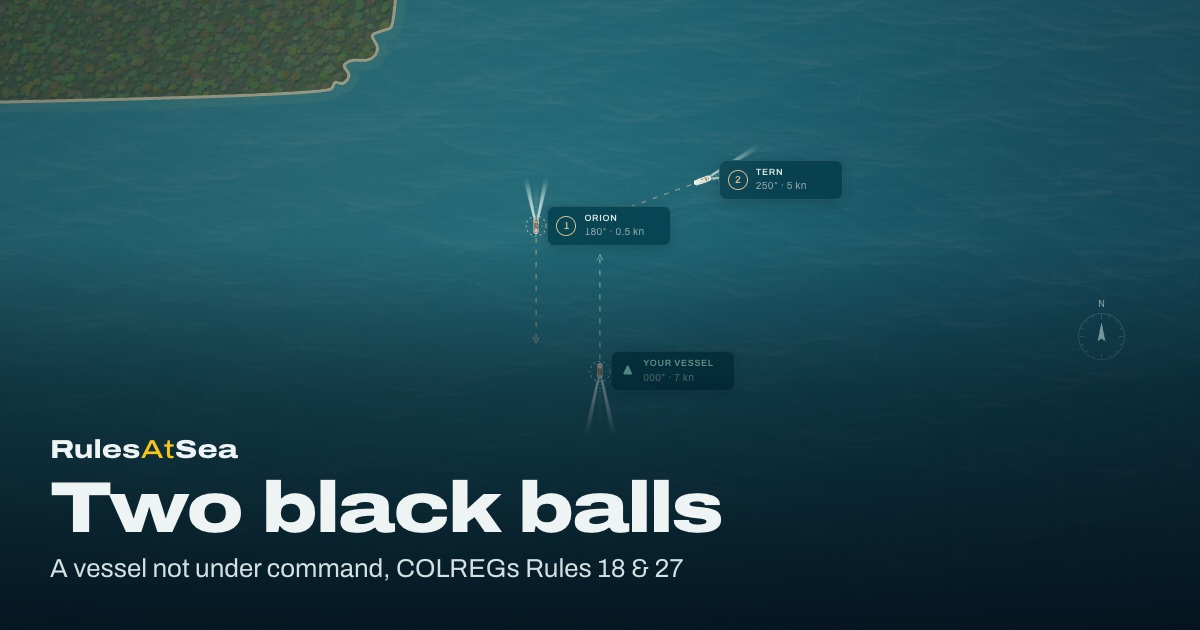 Daytime vessel signals
Day shapes
Recognise COLREG day shapes for anchor, fishing, motor sailing, long tows and vessel restrictions, with linked simulator recognition exercises.Read the guide Listen, identify and respond
Sound signals
Learn International COLREG horn blasts, overtaking replies and fog signals by listening to realistic RulesAtSea practice exercises.Read the guide Read marks with the chart
Buoys and navigation marks
Understand lateral and cardinal buoys, IALA A versus B, danger marks and flashing lights, then practise labeled navigation-mark exercises.Read the guide When you cannot see the other vessel
Restricted visibility
Revise safe speed, radar observations, Rule 19 and fog signals, then practise restricted-visibility decisions in the RulesAtSea simulator.Read the guide UK study and passage preparation
UK collision-rules revision
Practise IRPCS encounters, lights, day shapes, fog signals and Region A buoyage alongside your Day Skipper or Yachtmaster studies.Read the guide- Canada · navigation revision
Canadian boating-rules practice
Practise international collision-rule situations and Canadian-relevant Region B buoyage, with a clear guide to what PCOC learners still need.Read the guide
Put your knowledge to work
The encounter is where it comes together.
Switch between the chart and the view from aboard, choose a sound action, and follow the replay. The simulator explains the rule behind each authored situation.